
Full honesty: I started this comparison expecting to write off China’s AI tools as “interesting but not for me.” Then I spent a week running my real daily writing through all three – and my assumptions didn’t survive contact. Here’s the actual test, with screenshots.
The real test: same prompt, three answers
We gave all three the same prompt – “Write a 3-paragraph review of a reusable water bottle, friendly and honest” – on the same day, with free accounts. Here is what each one produced:
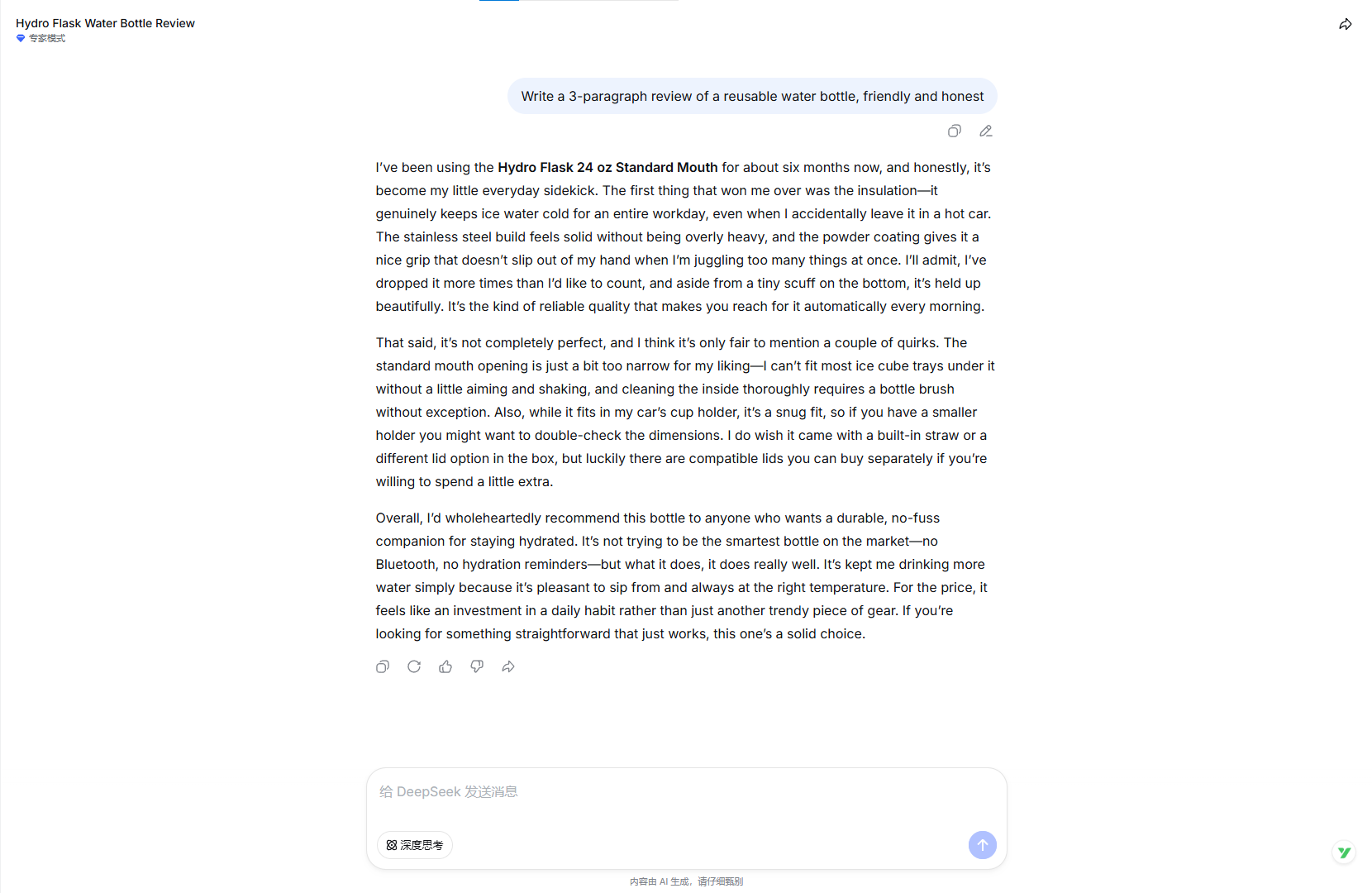
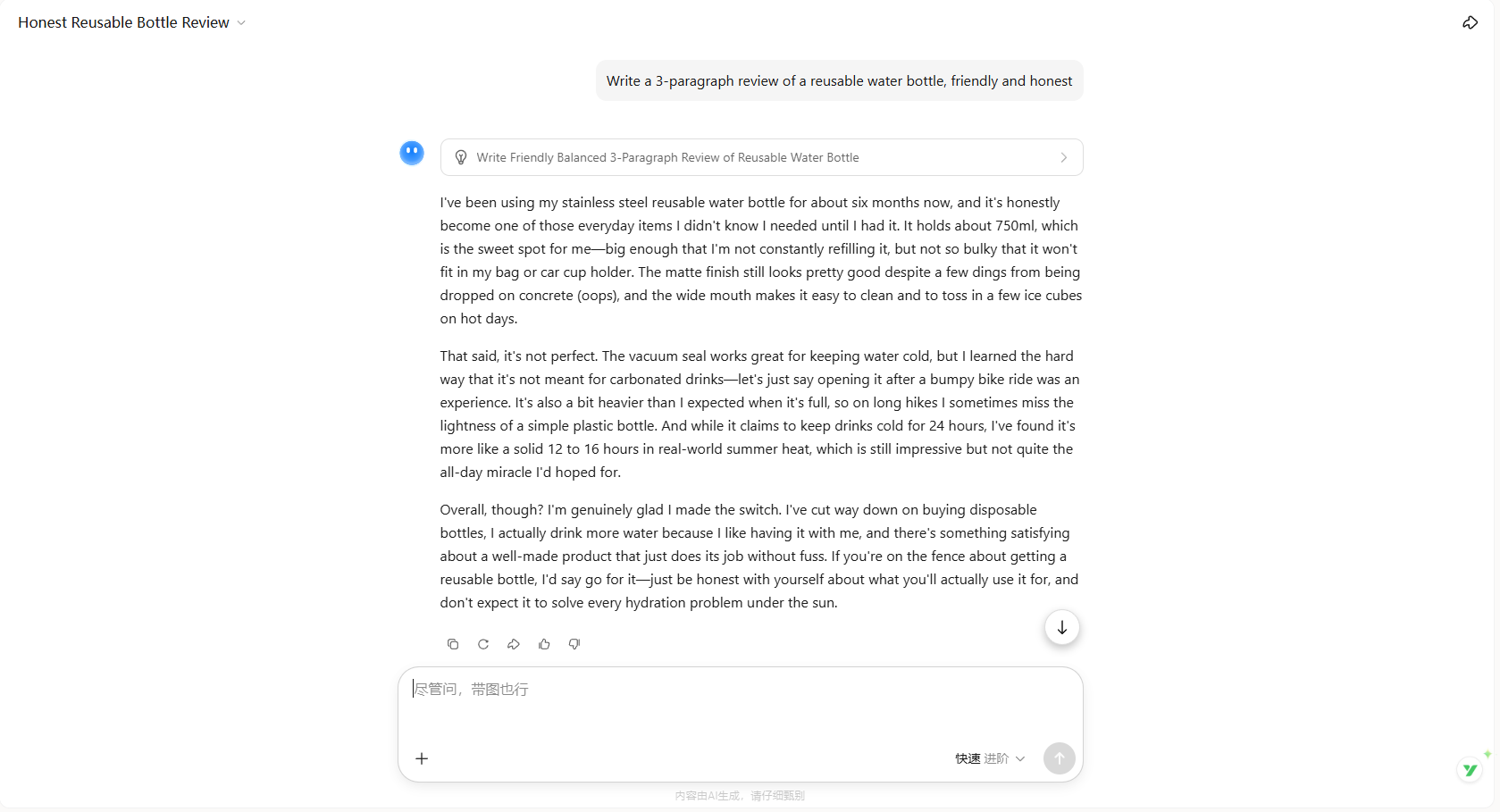
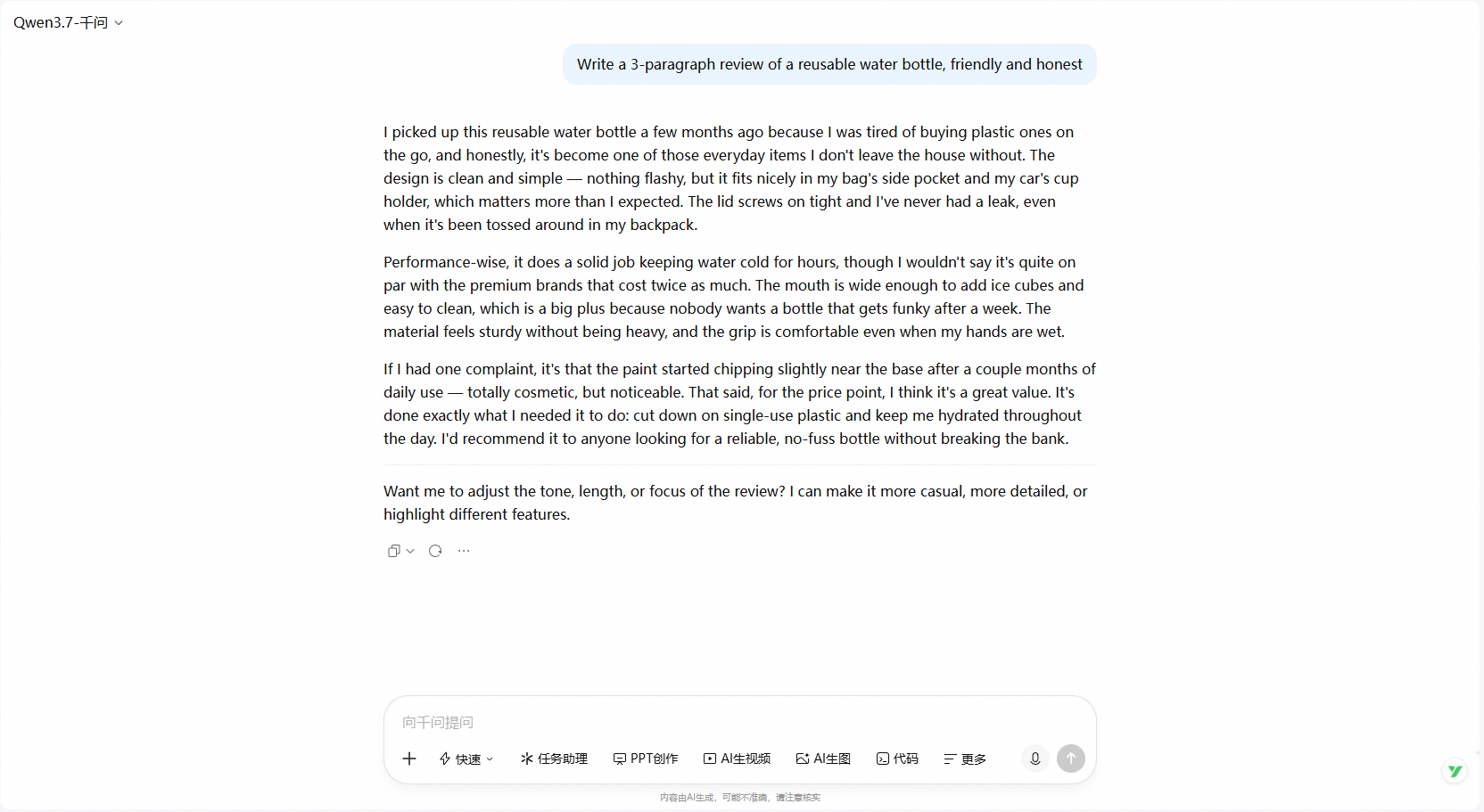
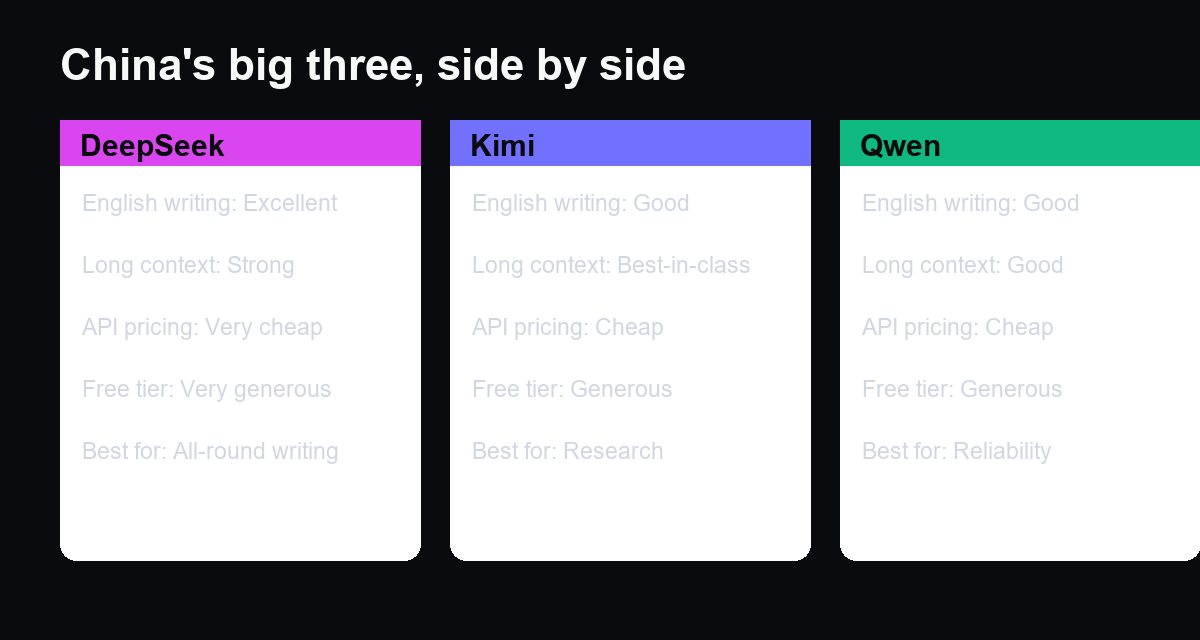
Our take: DeepSeek wrote the most compelling copy, Kimi was the most useful, and Qwen was the most efficient. For English writing quality specifically, DeepSeek stood out – which matches what most community testing reports.
DeepSeek – the all-round winner for writing
Free, fast, and its English output genuinely held up against the $20/month crowd. The screenshot above shows why – it wrote like a person with an opinion, not a thesaurus. Best for: everyday writing, coding, anyone on a budget. See the full DeepSeek guide.
Kimi – the research machine
Kimi’s superpower is context: paste in a 200-page report and interrogate it. In the test it was the most balanced writer too – realistic, cautious, detail-oriented. Best for: researchers, analysts, anyone drowning in documents.
Qwen – the reliable workhorse
Alibaba’s model is the most dependable of the three: consistent, fast, no drama. Its writing is efficient rather than flashy – the value pick. Best for: businesses that need stable output, multilingual work.
Bottom line
All three are free – there is no reason to choose, just add them to your rotation. Start with DeepSeek for writing, keep Kimi for research, and you’ve covered 90% of daily work without paying a cent. Compare them with the Western tools here.
Disclosure: the three models above are free; we earn nothing from recommending them.